AI-Generated 3D Model Copyright and Legal Issues Complete Analysis: Essential Legal Guide for Creators
As AI-generated 3D model technology becomes widespread, copyright and legal issues have become one of the most concerning topics for creators and enterprises. Can AI-generated 3D models be used commercially? Who owns the copyright? How to avoid legal risks? This article will provide you with comprehensive and professional legal guidance.
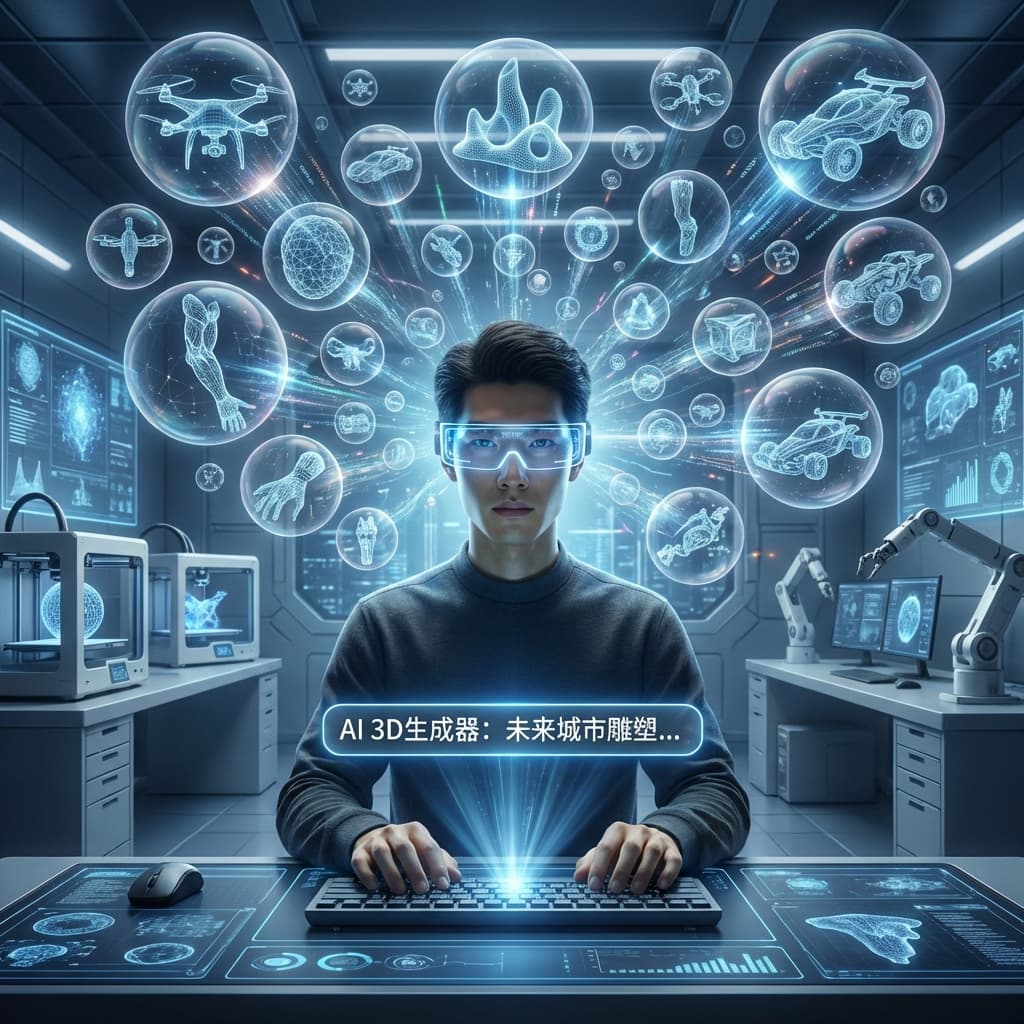
AI generating 3D models with abstract lines and nodes connecting to a central AI brain, surrounded by glowing data streams, creating a visual of creation and complexity.
Current Legal Status of AI-Generated Content
Evolution of Global Legal Frameworks
Currently, countries worldwide are still developing legal definitions for AI-generated content. The U.S. Copyright Office clearly stated in 2023 that AI-generated works without human creative contribution will not be protected by copyright. The EU is formulating an AI Act that proposes new frameworks for rights attribution of AI-generated content.
In China, while there are no specific legal provisions for AI-generated content, according to basic principles of the Copyright Law, works must be created by natural persons to enjoy copyright. This means purely AI-generated content may legally fall into the "public domain."
Importance of Platform Terms
In the absence of complete legal frameworks, service terms of various AI platforms become important legal bases. Platforms like Open3D.art typically specify usage rights attribution and restrictions for generated content in user agreements.
Complexity Analysis of Copyright Ownership
Recognition of Creative Subjects
Traditional copyright law recognizes that creative subjects must be natural persons, creating legal gaps for AI-generated content. Currently, there are three main viewpoints:
User Ownership Theory: Believes users utilizing AI tools should enjoy rights to generated content, similar to photographers owning copyright of photos taken with cameras.
Platform Ownership Theory: Believes platform companies developing AI models should own rights to generated content, as AI models are their intellectual property.
Public Domain Theory: Believes AI-generated content should not be protected by copyright and should belong to public domain, available for free use by anyone.
Open3D.art's Copyright Policy
Open3D.art clearly states in its service terms:
This policy is relatively open in the industry, providing users with considerable usage space.
Legal Considerations for Commercial Use
Risk Assessment for Commercial Use
When using AI-generated 3D models for commercial activities, consider the following risks:
Copyright Dispute Risks:
Contract Breach Risks:
Strategies to Reduce Legal Risks
Detailed Generation Process Records:
Conduct Originality Checks:
Obtain Clear Authorization:
Legal Requirements for Different Industries
Gaming and Entertainment Industry
The gaming industry has high originality requirements, requiring special attention when using AI-generated assets:
Character Design: Avoid generating models similar to well-known game characters
Scene Elements: Ensure architectural and environmental designs don't infringe others' rights
Prop Design: Pay special attention to weapons, vehicles and other items that may have real prototypes
Best Practices:
Architecture and Engineering Fields
Architectural design involves practicality and functionality, making legal considerations more complex:
Design Originality: Copyright protection for architectural design is relatively complex, functional elements are usually not protected
Engineering Standards: Ensure generated models comply with relevant technical standards and specifications
Client Rights: Clearly inform clients about AI-assisted design usage
Manufacturing and 3D Printing
Manufacturing industry faces unique legal challenges when using AI-generated models:
Product Liability: Responsibility attribution when products using AI-generated designs have problems
Patent Risks: Generated product designs may inadvertently infringe existing patents
Quality Standards: Ensure AI-generated designs meet industry quality standards
International Legal Differences and Responses
Differences in Major Jurisdictions
United States:
European Union:
China:
Compliance Strategies for Cross-Border Business
Choose Strictest Standards: Execute according to the strictest standards among all jurisdictions involved in business
Localized Compliance: Adopt corresponding compliance measures in different regions
Professional Legal Consultation: Hire professional lawyers familiar with local laws
Contract Terms and Authorization Management
Key Terms in Platform Service Agreements
When using AI 3D generation platforms, focus on the following terms:
Usage Rights Scope:
Attribution Requirements:
Liability Limitations:
Internal Enterprise Authorization Management
Establish Usage Policies:
Training and Education:
Infringement Risk Prevention and Response
Proactive Prevention Measures
Originality Verification:
Legal Insurance:
Responding to Infringement Allegations
When Receiving Infringement Notice:
1. Immediately stop using disputed content
2. Preserve all relevant evidence
3. Contact legal professionals
4. Evaluate possibilities for rebuttal
Evidence Preparation:
Future Legal Development Trends
Legislative Trend Predictions
Specialized Legislation: Countries may introduce specific laws and regulations for AI-generated content
International Coordination: Unify AI copyright standards through international treaties
Industry Self-Regulation: Industry organizations develop more detailed self-regulatory norms
Legal Impact of Technological Development
Enhanced Traceability: Improved transparency in AI generation processes will help copyright determination
Personalized Generation: Higher personalization may enhance copyright protection possibilities
Multi-Modal Integration: Technological integration will bring more complex legal issues
Practical Recommendations and Action Guidelines
Recommendations for Individual Creators
Basic Protection:
Commercialization Preparation:
Recommendations for Enterprise Users
System Building:
Cooperation Strategies:
Platform Selection Recommendations
When choosing AI 3D generation platforms, consider the following legal factors:
Transparency: Whether platforms publicly disclose copyright policies and data sources
Authorization Scope: Whether commercial use permissions are clear
Responsibility Sharing: Whether platforms provide legal support and protection
Compliance Record: Whether platforms have good compliance history
Summary and Outlook
While legal issues surrounding AI-generat...